Connecticut winters are nothing to take lightly. Blizzards and Nor’easters are serious business for homes and offices alike, and the damage they do to a roof usually starts with something most homeowners never see from the ground: an ice dam.
What an ice dam actually is
When ice blocks your gutters, melting snow has nowhere to drain. Water builds up behind the blockage — that’s the dam — and with nowhere else to go, it gets forced back up under your shingles. From there it moves into walls, floors, and ceilings.
The damage is not from the ice sitting on the roof. It’s from the water that the ice will not let off the roof.
Why waiting makes it worse
The longer snow and ice sit on a roof, the harder they get — and the harder they are to remove safely. A dam that could have been cleared early becomes a solid mass, and the weight stays on your roof the whole time.
The two jobs that prevent it
Roof snow shoveling
We remove snow from the roof to prevent water buildup and stop ice dams before they form. It also takes the load and weight off the structure, which matters after a heavy storm.
Ice dam removal
Ice dams form at the roof’s edge and keep melting snow from draining properly. We remove them before leaks damage your walls, floors, and ceilings.
Snow piling up?
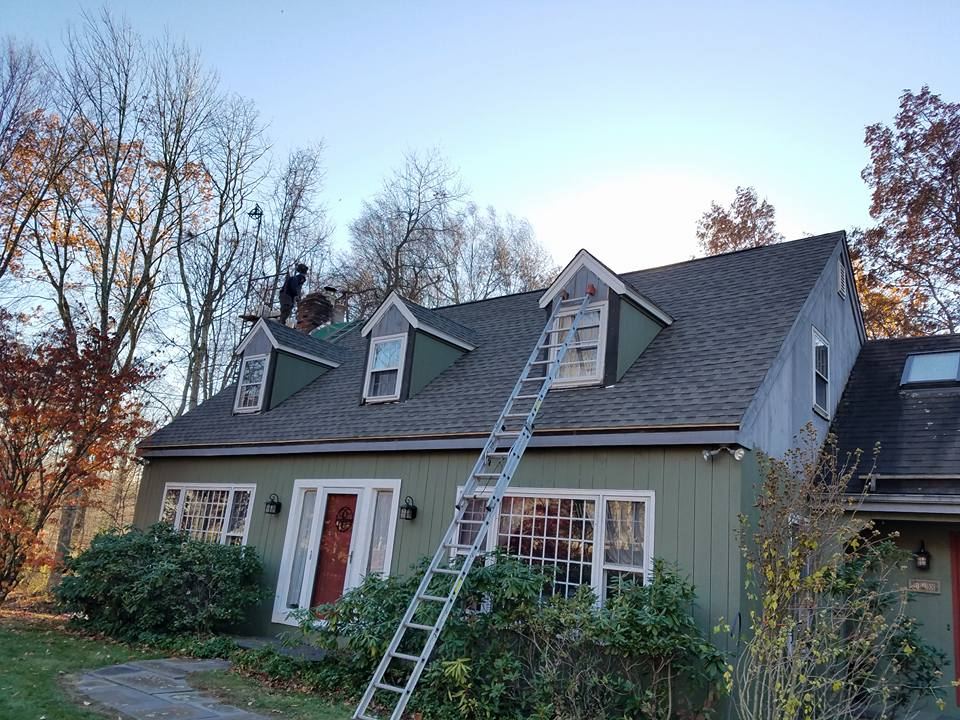
Don’t wait it out. The longer you leave snow and ice on a roof, the harder the job gets and the greater the risk to your home. Our crew is trained and equipped for winter roof work across Upper Fairfield and Litchfield County.